

The publication of this issue marks the end of a period of change for the editorial team at Genii. The March issue was my first as executive editor, April saw Benjamin Barnes step in as one of our two new magic editors, and this issue sees us welcome our second magic editor, Lorenz Schär, to our pages. We are excited to stop thinking about handovers, inductions, and onboarding, and instead focus fully on the most important thing that Genii can do: sharing the best that magic has to offer from around the world. Speaking of which….
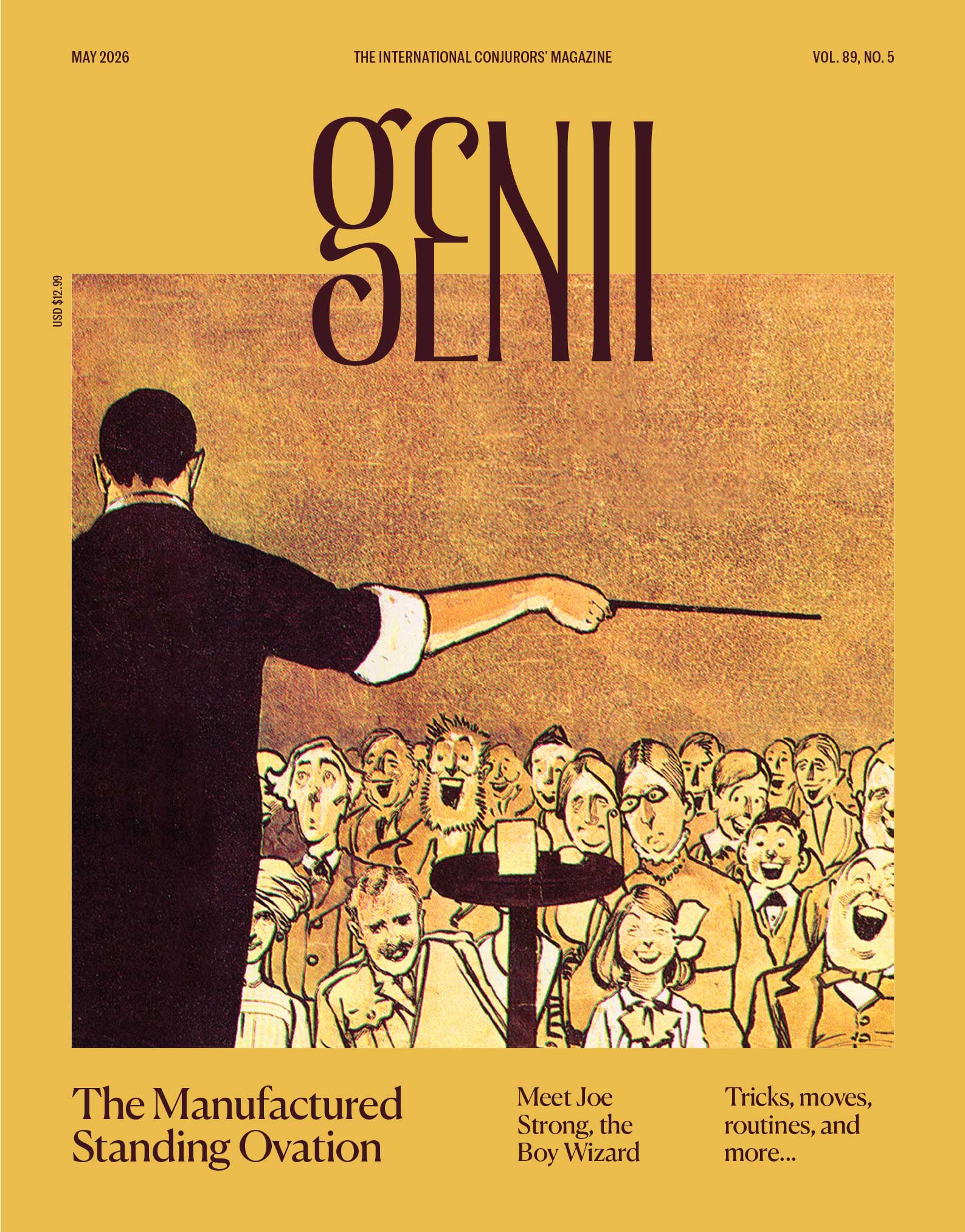
As I began to look at the Genii files, in the late summer of 2025, I discovered a treasure trove of ideas for the magazine, including the suggestion of a piece on manufactured standing ovations from our editor at large, Chloe Olewitz. The feeling of being forced to stand at the end of an act or show has always annoyed me (the last genuine standing ovation I have seen for a magic act was for Marko Karvo’s stunning work in Blackpool in 2020) so the idea of a short piece exploring the pros and cons appealed. It turns out I underestimated both the richness of the subject and Chloe’s ambition for it. For the last six months she has been planning, interviewing for, transcribing, editing, and writing a valuable piece of work, which you will find later in this issue.
Chloe explains:
When I set out to collect an oral history of the manufactured standing ovation, I had a particular definition in mind. I’d lost count of how many magicians in a row I watched overtly demand that an audience get to their feet, and I hated how that felt. I remember one time I was so fully on the magician’s side that when he did it, I could practically hear the bubble pop. Why’d you tell me you deserve a standing ovation? I already thought you deserved plenty.
There’s a scene in The Good Place in which a demon (Ted Danson) plays the part of a magician. He asks non-human/non-robot entity Janet (D’Arcy Carden), who controls reality in the afterlife, to “make them clap harder” when his coin trick goes wrong. She rolls her eyes: “They see what they see, man.”
Clearly, calling it a “manufactured standing ovation” is loaded. Through interviews with 20 magicians, it became clear that there are many more forms of “manufacturing” than the explicit ask. Maybe they’re not all good or all bad. Maybe it depends on who, and when, and how.
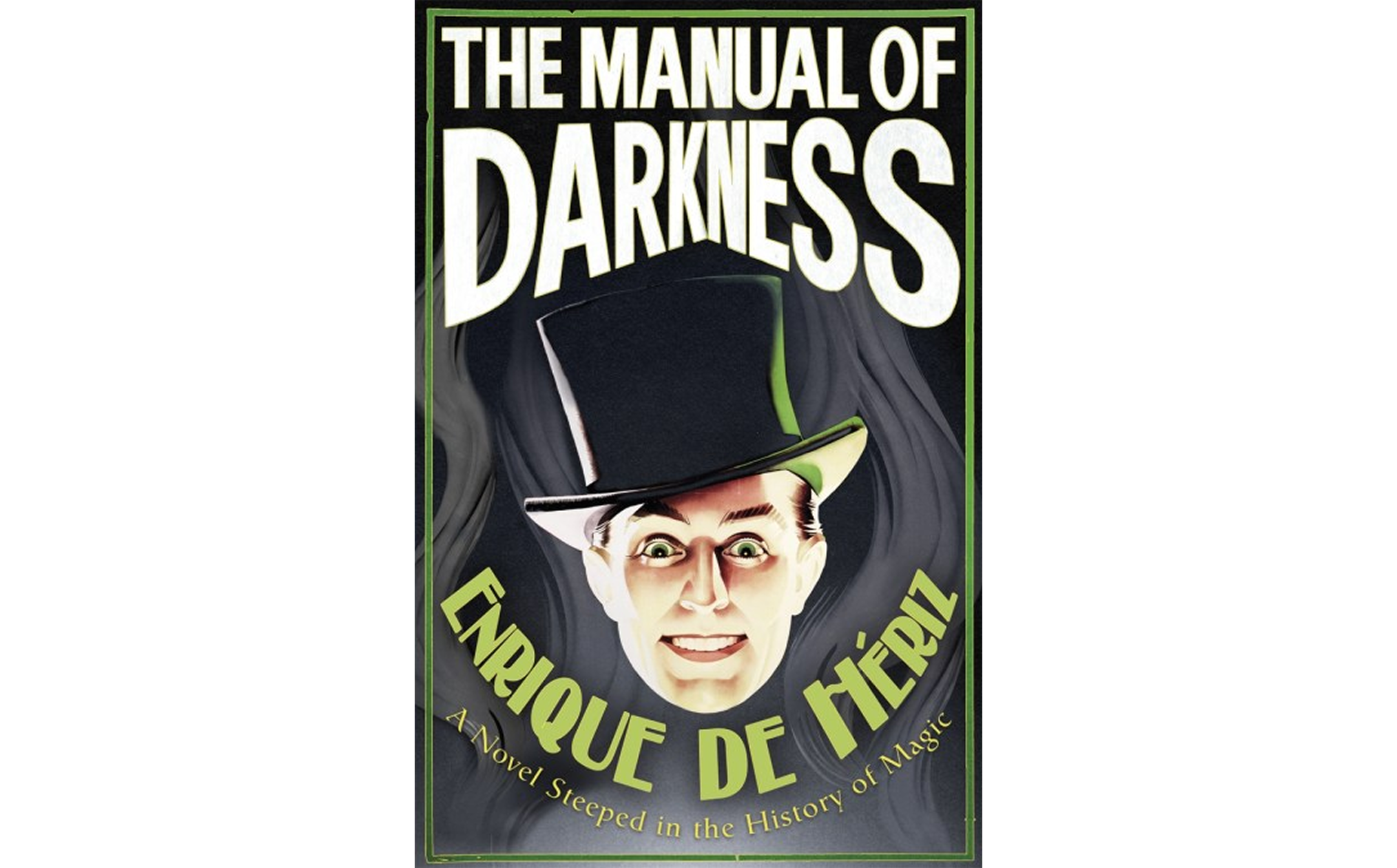
In our second feature Paul Heller explores the world of Joe Strong, a fictional young man who spent the first part of the 20th century engaged in all sorts of adventures and acts of derring-do, including some with a magical connection. I am a fan of popular fiction that features magic and magicians, having studied Conjurer Dick, a Hoffmann work that Paul cites as a predecessor of the Joe Strong books, as well as enjoying more contemporary works. The obvious danger with fiction that features an area about which you have some knowledge is that the errors a careless author can produce make your teeth itch. If you happen to be in the market for a dose of magic-inspired fiction then I would highly recommend Enrique de Hériz’s The Manual of Darkness. It is not a new book (I reviewed it in the April 2014 issue of Genii) but it is well grounded in the history and culture of magic, and your knowledge as a magician will make it all the more enjoyable a read.
As you move into the body of this issue you will discover a rich smorgasbord of ideas and inspiration from our columnists and contributors. To me the ideal column achieves three things. First, it delivers on its basic promise to the reader by doing whatever it ostensibly sets out to do. Second, it exceeds expectations by offering something else of value, perhaps something unexpected or something more generally applicable than the reader might expect. And third, it is written in a style that is enjoyable to read, whether one is concerned with its topic or not.
If you are perusing this issue of Genii based on what a column seems likely to cover and how that intersects with your own interests, I think that there is much you will miss. Let me give you two examples, and then save you the pleasure of discovering more for yourself.
A devoted card magician could easily assume that Chris Power’s column on “recharging the battery” was only pertinent to those suffering from magical burnout, and skip past in search of card material elsewhere in these pages. If they did, they would miss a wonderful idea for the card to wallet. Chris told a friend and me about this gem at the Blackpool magic convention, and it is one of those things that is so clearly good, as well as obvious in retrospect, that you can’t believe you haven’t come across it elsewhere or thought of it yourself. And yet neither I nor my friend (who has been manufacturing and using his own card-to-wallet wallets for the best part of a decade) had come across it before.
It is equally possible that a hypothetical reader who doesn’t have an interest in matters of fashion would skip past Rachel Wax and Prakash Puru’s Stylish Characters in Conversation. If they did, they would not only miss out on a sparkling read, they would also flip past an observation on how to make almost anything within any performance better—make a choice. To make a choice is to think and to care, and whether your choice is the optimum one or not, the very act of choosing will offer an improvement on just seeing what comes to pass.
Among our columns and reviews you will discover the second installment of the recently recommissioned Magicana, this month organized by Lorenz. He transports us to a gathering of card magicians in Nuremberg and convinces some of the participants to share their prized material in the pages of Genii. Whether you are looking for a casual close-up trick or fully formed stand-up routine, sleight-of-hand finesse or a gag for your magician friends, we have you covered.
Founded on North America’s West Coast in 1936 as the organ of the Pacific Coast Association of Magicians, the DNA of Genii is firmly grounded in Los Angeles. However, as editor emeritus Bill Larsen Jr. said, in an editorial in 1974, “within a few years we have had columnists from all over the U.S.” and that as “magic become[s] more international” the goal of Genii is to be “up to date with all the news, no matter where it is made.”
Today the core Genii team spans the United States and branches into Canada, England, and Switzerland. In this issue alone we share work from additional countries including Argentina, Australia, France, Germany, Italy, Ireland, Scotland, Spain, Sweden, and the United Arab Emirates. And, of course, we have readers across the world.
In order to celebrate our past, reflect our present, and acknowledge the future we want to build for Genii, we are reverting to the masthead the magazine used between 1974 and 1999. Welcome to the May issue of Genii, The International Conjurors’ Magazine.
As we go to print we have heard news of a fire at The Magic Castle. We are relieved to learn that nobody was injured, and that it was contained and controlled. More information will be shared in the next issue.
Erratum: Unfortunately an error crept into the April Genii, in our celebration of Mary Naylor Kodell’s 100th birthday. The photo we used on page 20 that was captioned “Jack and Mary Kodell,” had been filed under the wrong name, something we failed to spot. The eagle-eyed Richard Hatch noticed the image does not depict Jack and Mary, but rather Jack and Kitty Hennessey, an earlier assistant. Apologies for any confusion caused, and particularly to Mary.