
As someone who often works in film and theater, devising effects that are principally used to tell stories or create atmosphere, I am fascinated by magic that is not primarily concerned with the technical exercise of fooling audiences.
When you are watching a play, an effect that is too fooling is, if anything, a problem. Theater is often founded on an audience’s willing suspension of disbelief (in a way that magic arguably isn’t), a fragile state that can be shattered when something impossible seems to really happen in front of them—add too-puzzling an effect to a play and there is a risk that the imagined world that has been painstakingly created onstage collapses under the force of an audience member’s rational mind trying to work out how what they just saw happened.
The shift in focus from the technical solution for a magic effect to the meaning it creates is a central theme in Bi Gan’s film, Resurrection. Magic is key to the movie, both as a framework and as a specific trick that is used in one of its chapters, and after watching a screening I was desperate to talk about the film in the pages of Genii. I was also aware that my knowledge of both cinema and Chinese culture were not up to the task, which is why I am thrilled that Mingkun Li, a film scholar and lecturer in Chinese studies, has contributed a feature to this issue. Enjoy his piece and do watch the film, ideally in the cinema if you can find a screening.
If Resurrection is primarily not concerned with the technical ingenuity behind magic tricks, then Tenyo’s remarkably clever effects are at the precise opposite end of the spectrum. Former Genii editor and Tenyo aficionado Richard Kaufman went to Japan for the unveiling of their new line of products and you will find rundowns of the latest releases, as well as an overview of the launch event, in a special marketplace article.
Unsurprisingly Richard did not limit his magic activity in Tokyo to the Tenyo Festival. He also reports:
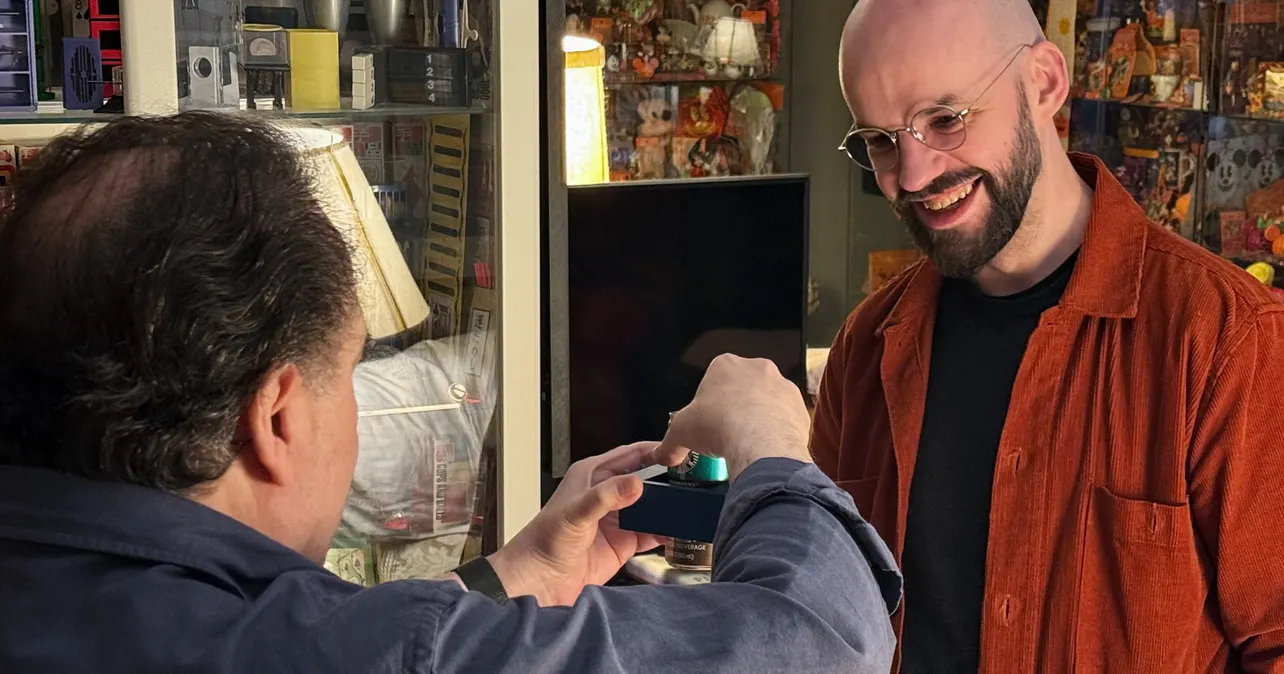
Among the highlights of my trip to Tokyo was being invited to a preview in advance of the opening of Hide Yamamoto’s new Half Moon Lab, the latest incarnation of his famed Half Moon magic bar. Hide has performed at The Magic Castle on several occasions and the new venue has been opened in partnership with The Castle. This is not a surprise as Randy Pitchford is one of Hide’s biggest fans. The first time Hide worked The Castle, J.J. Abrams brought Steven Spielberg, Jon Favreau, and Guillermo Del Toro to see him. Those gents don’t leave home for the average magician.
By the time you read this The Half Moon Lab will be open for regular business. Like most small bars in Tokyo (magic or not), it seats about 12 people so reservations are imperative. Tokyo is my top travel recommendation and the Half Moon Lab is a must visit for any magic lover who wants to see one of the world’s greatest magicians. There is no website and reservations can only be made by contacting Hide through Instagram: @halfmoon_hide_magic
(Correction: Hide’s Instagram has changed since the print issue was released and it has been updated here.)
With this issue our 89th volume comes to an end, and 2026 draws to a close. The entire Genii team wants to express our gratitude to everyone who contributes so much to this magazine, and particularly to namecheck those who have stepped down from regular duties with this volume: Alba, Alex Boyce, Sara Crasson, Jim Hagy, Matthew Holtzclaw, Noah Levine, Laura Pulling, Prakash Puru, Abby Segal, Jim Steinmeyer, Dustin Stinett, Rachel Wax, and Ben Winn.
Finally, from all at Genii HQ, we hope you have a wonderful festive break and that 2027 is full of good things for you and yours (not least some of the plans that we have already set in motion for our 90th volume).
Erratum
In the October Genii we shared Roberto Mansilla’s column on the Diminishing Cards, in which we erroneously gave the date of publication (in English) of Robert-Houdin’s Secrets of Conjuring and Magic as 1978. It should, of course, have been 1878. Apologies for any confusion caused.