
We know the story well. In 1921, P.T. Selbit walked onto the stage at the Finsbury Park Empire in London, had a woman sealed in a wooden box, and made the audience watch something that became an instant sensation. Many wonderful variants of the illusion have been dreamed up in the century since, creating a special place in our shared culture as magicians. With that comes historical explanations of its genesis. One of them goes like this: Britain in 1921 had enjoyed three years of the partial enfranchisement of women, and a female body was being subjected to a man’s instrument, bisected and reassembled at his pleasure, playing out the cultural fantasy of containment. On the stage, the magician could portray and resolve anxieties about female power. The woman in the box represents womanhood, the magician the masculine authority, and the saw, well… quite. It is a compelling argument. It has the satisfying click of a really good cultural explanation. But there is something that this account does not explain well. In at least one rehearsal, Selbit put the woman into a silk Pierrot costume.
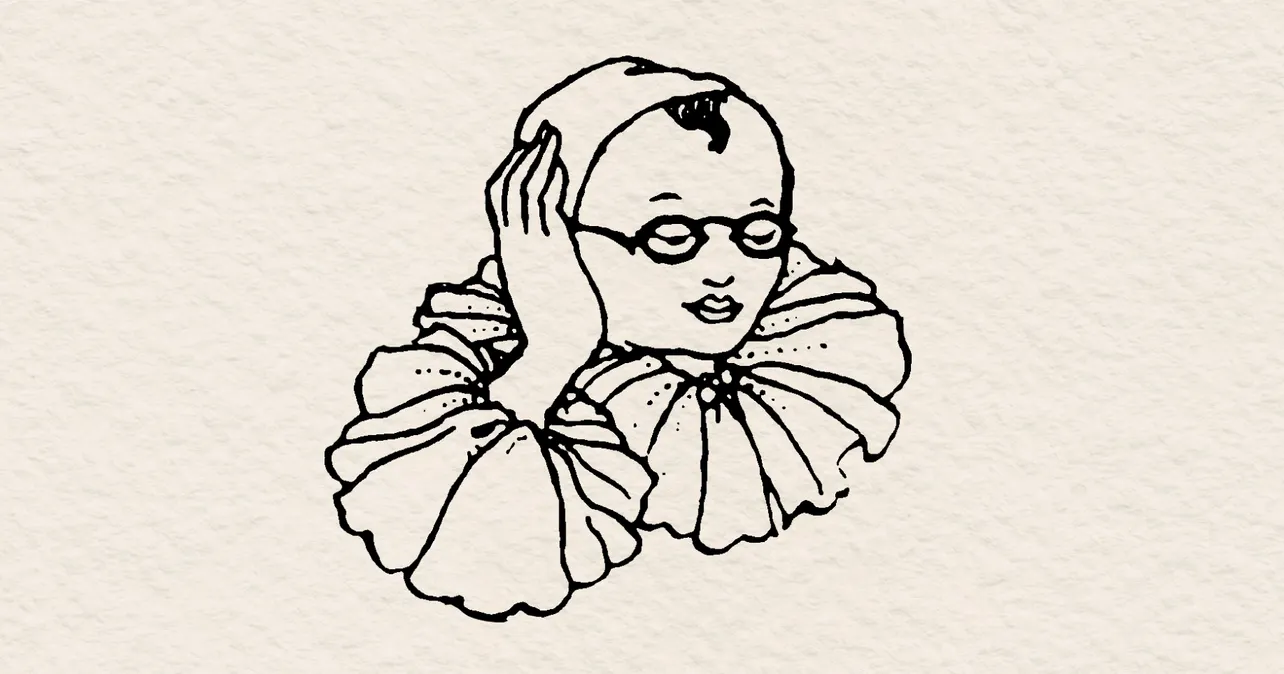
Pierrot. Of all the figures in the Commedia Dell’Arte, Pierrot is the most deliberately, provocatively androgynous. By the period of Sawing, Pierrot had become the mascot of aesthetic and gendered ambiguity. Pale, sad, sexually undefined, Pierrot was beloved by the Decadents as representing the artist’s withdrawal from modern life, taken in a Slavic parallel by Nijinsky in the iconic Petrushka, and worn by figures who wished to signal that they stood outside the ordinary categories of gender and desire. The Edwardian Pierrot was not quite of this world. And importantly for Sawing, Pierrot was the perennial victim of the Commedia. Pierrot was the one who gets beaten; the one whose suffering is, somehow, a cause for mirth. So, what happens to the gender-suffrage argument of Sawing when you put a woman in the costume of this transcendental figure? Does the detail disprove the argument? No. Does it complicate it, enrich it, and ultimately make it much more interesting? Absolutely. And the question of how to think about that complication—how to take an early choice and think about what it meant, to whom, and when—is what cultural history is for.