
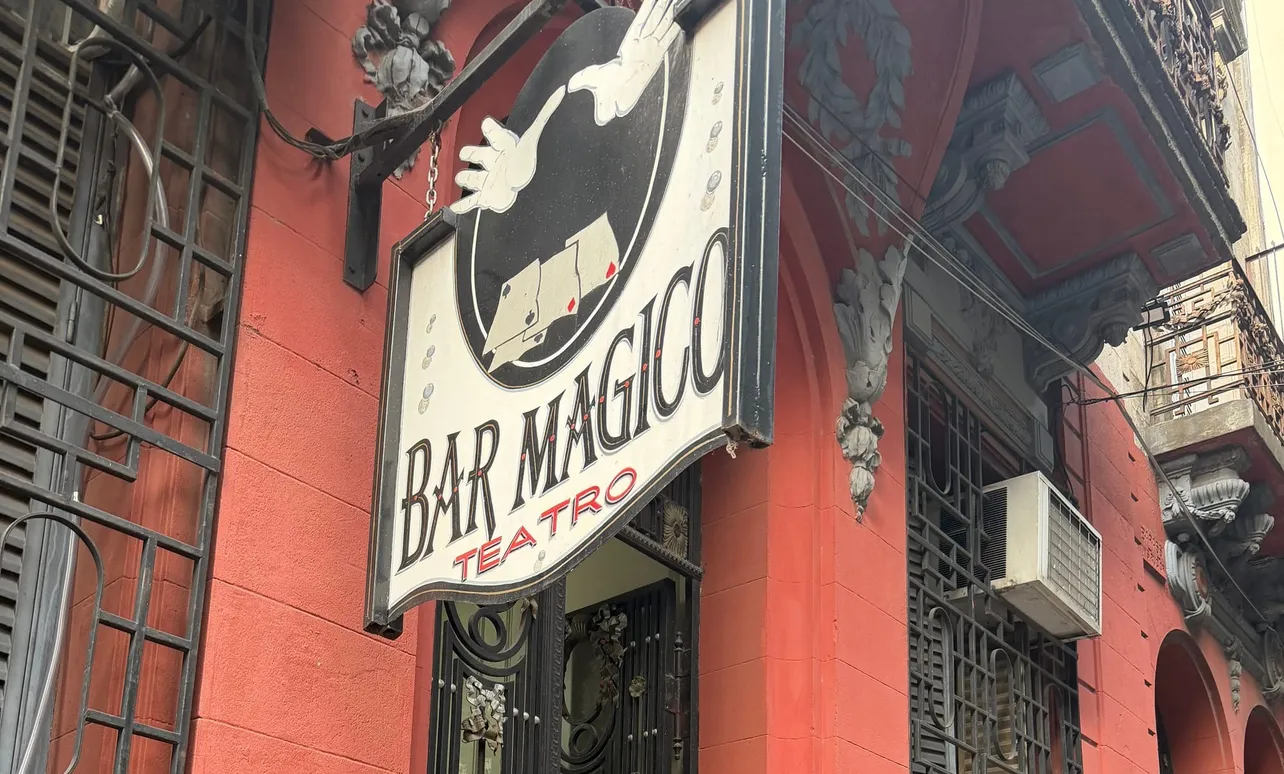
Marcelo Insúa has been bringing magic to Buenos Aires for three decades. In 1995, he and his wife bought an old house in the city. They started a magic school and opened a magic shop there, and in 1997 they opened a magic bar they initially named Mandrake Bar Mágico. The venue’s original name was an homage to the first comic book magician (a character you can read more about, in fact, in Genii’s March 2026 issue). That name, however, was short-lived. “Two months later, I get a letter from a lawyer who was representing the owner of Mandrake,” Marcelo said. “They told us to stop, and so we took out ‘Mandrake’ and became Bar Mágico.”
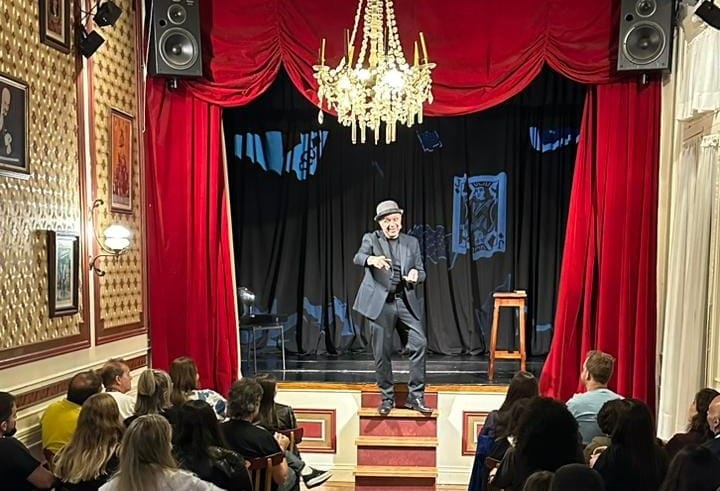
Marcelo secured Argentinian legend René Lavand to perform for the bar’s 1997 opening, and there’s been magic there every week since. The venue has been supported all these years in no small part by Marcelo’s other venture: Tango Magic. “It’s not a profit activity, you know?” Marcelo said about the theater. “Tango allows me to support the magic bar for all these years.”
Thousands of shows for hundreds of thousands of people
Since the beginning, Bar Mágico has hosted two shows a night every Friday and Saturday; that adds up to over 6,000 performances over the 29 years the theater has been open, with over half a million people experiencing a fun night of magic.
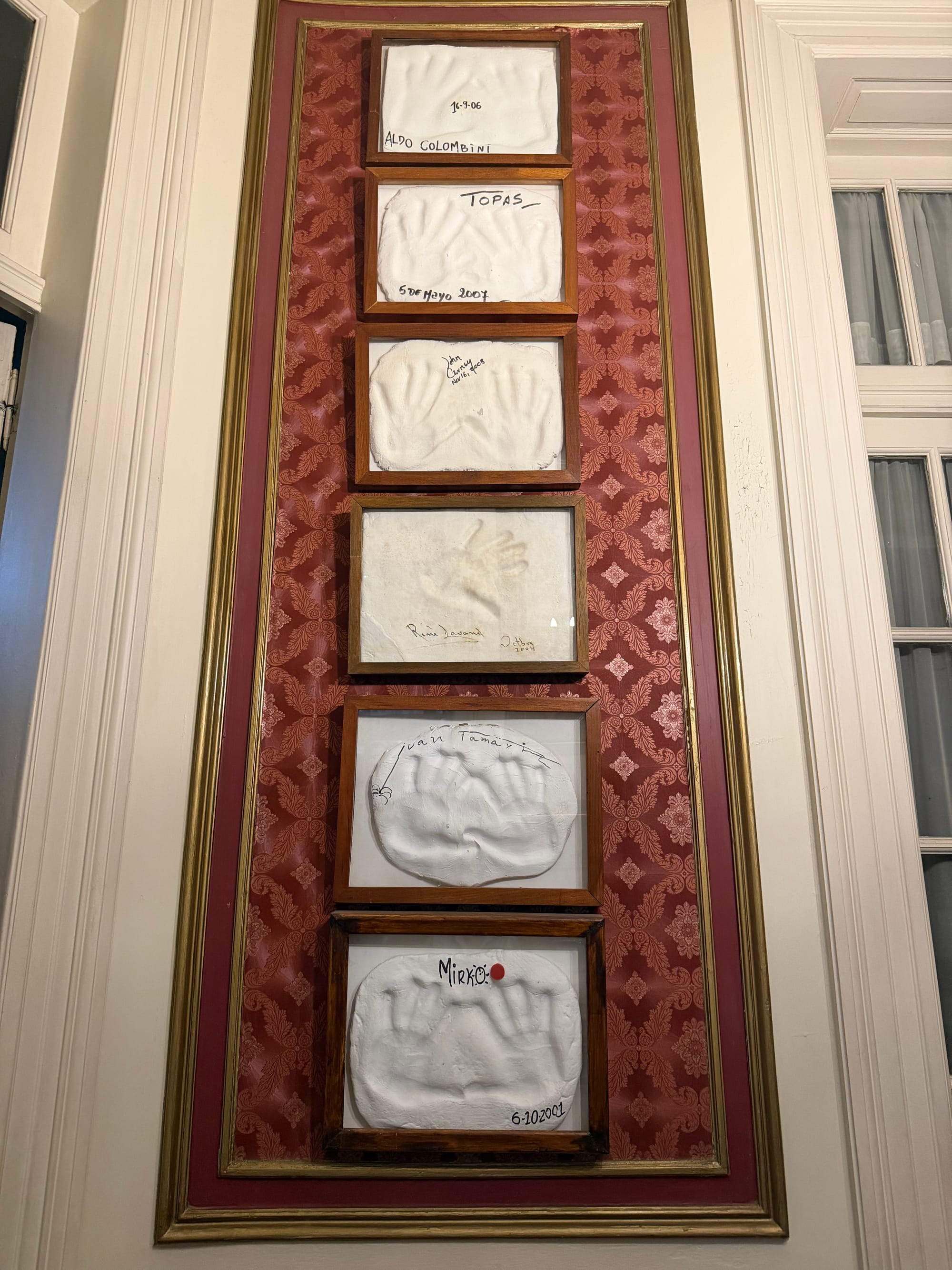
Those hundreds of thousands of people had an immersive experience. “The house is really beautiful,” Marcelo explained, adding that in addition to having posters of magicians on its wallpapered walls, there are also “the hands of the more famous magicians that came here.” Those hands—and there are 40 or 50 pairs of them—aren’t photos, drawings, or anything grislier you might be thinking of; they’re imprints of the performers’ tools of prestidigitation pressed into cement. It’s not unlike what you’d see in Los Angeles outside of the Chinese Theater, except instead of Tom Cruise’s hands, you see Topaz’s, René Lavand’s, Juan Tamariz’s, and John Carney’s.
When a guest visits Bar Mágico, they can admire the hands and the art deco decor of the venue while getting a drink and perhaps a snack at the bar. (Bar Mágico also used to serve dinner, but that didn’t come back after Covid.) There’s also a magic shop selling props and books, if anyone gets a hankering to learn some magic of their own.
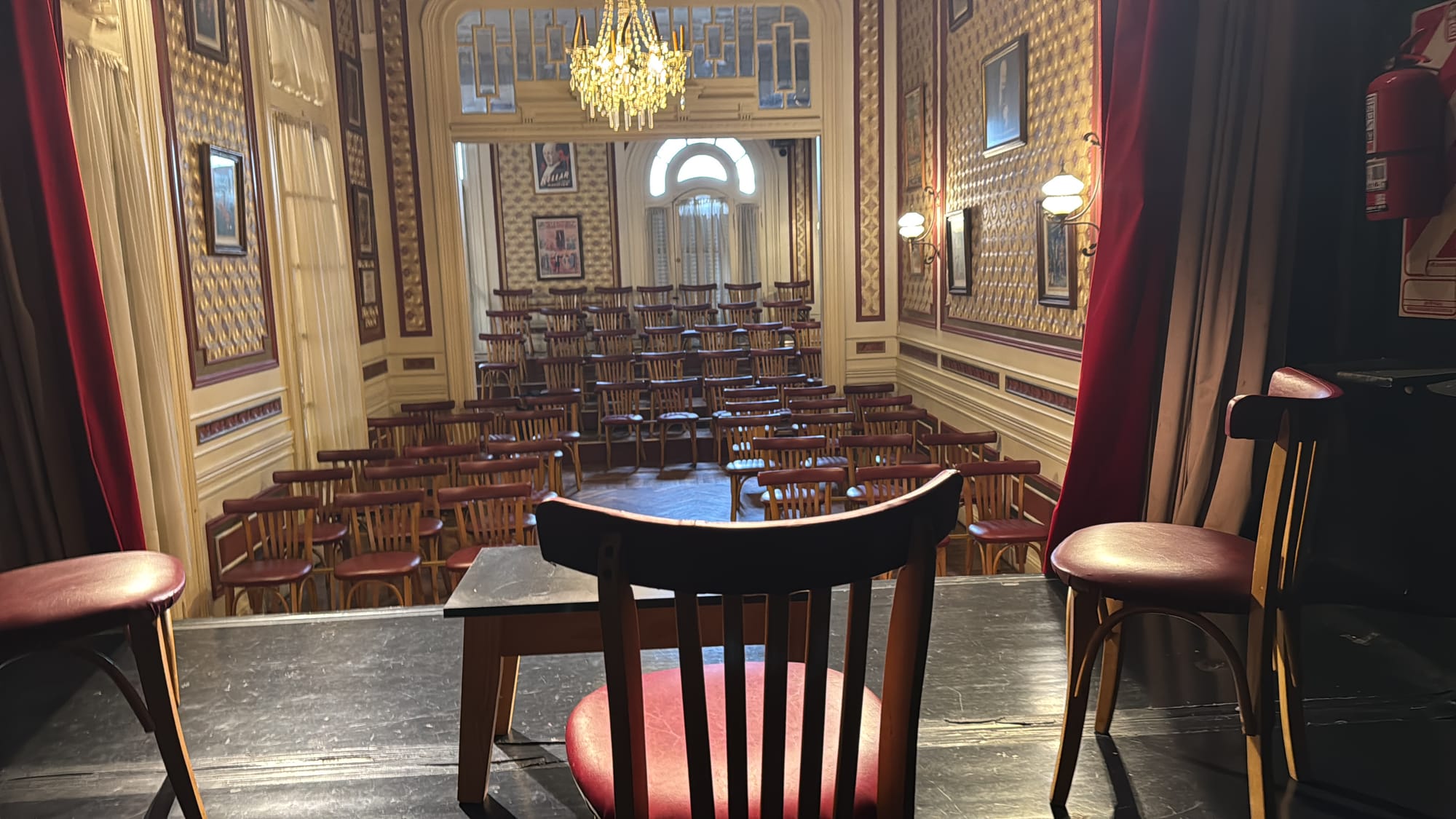
The venue has two places for magic: a 40-seat close-up room and a 70-seat parlor stage. Each night there is a 7 p.m. close-up show that lasts for 45 minutes, followed by a 9 p.m. stage or parlor performance that runs from 60 to 90 minutes. Guests can buy a ticket to either show, or both. They have also recently started hosting a family show on Saturdays, upping the number of performances per week to five.
A place to perform, and learn
Both rooms have a different magician both nights, so there are four different performers people can see on a given weekend. Marcelo is one of those magicians sometimes, and also books the venue.
Occasionally, he sees an opportunity for up-and-coming magicians to learn there as well. For those who are not quite ready to have their own full show at Bar Mágico, he offers them five minutes at one of his shows to practice specific routines. For those who might need a bit more help, he recommends they attend his magic school, which also still runs out of the house three days a week. A lot of magicians have gone to that school, and performed at Bar Mágico, making the venue an ongoing nexus of magic in Latin America.
Photos courtesy of Bar Mágico Teatro
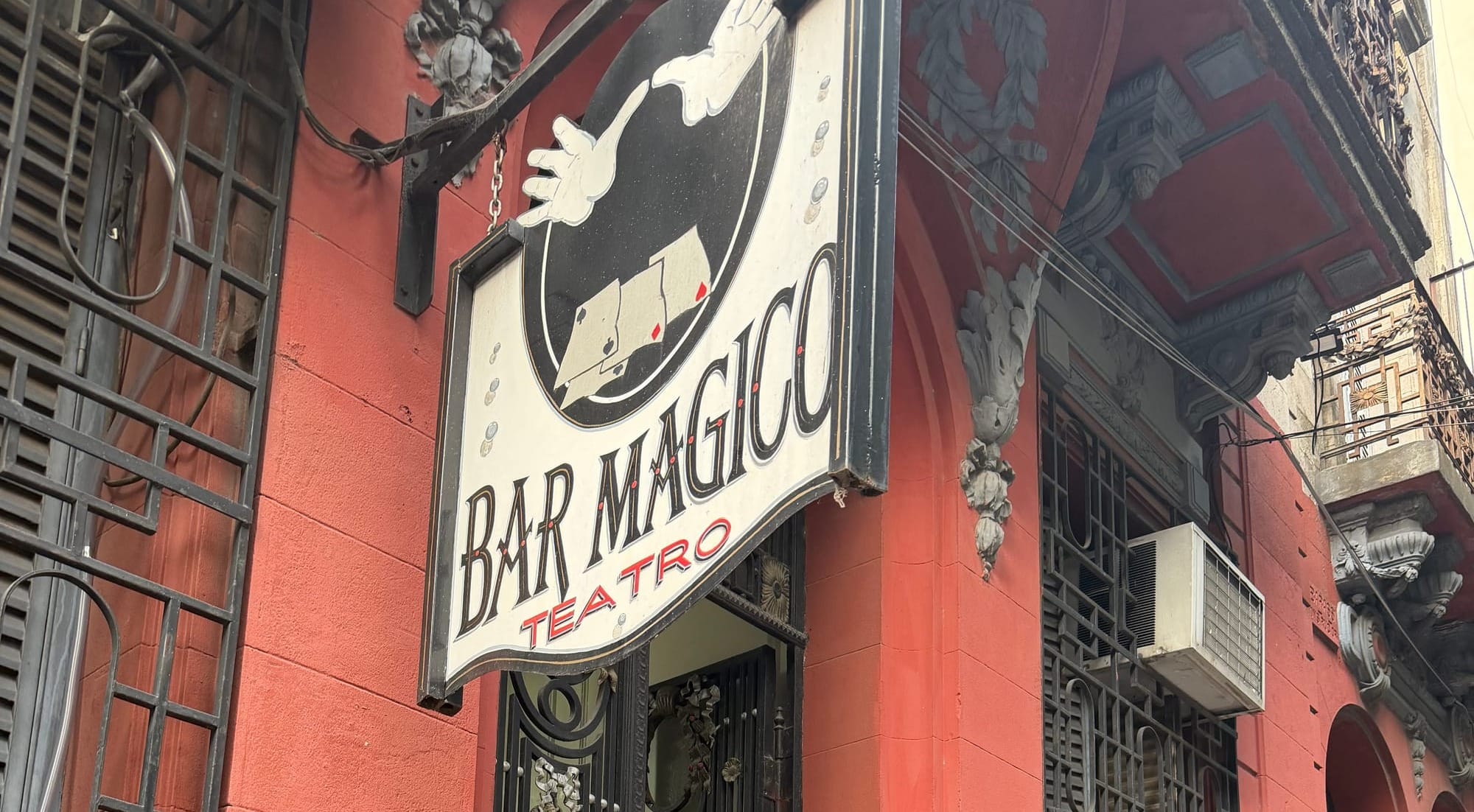
Bar Mágico
Enjoy the hospitality and magic at this Buenos Aries cocktail bar and magic theater. Here you can enjoy magic just inches from your eyes, where the lines of impossible and reality blur together.