01
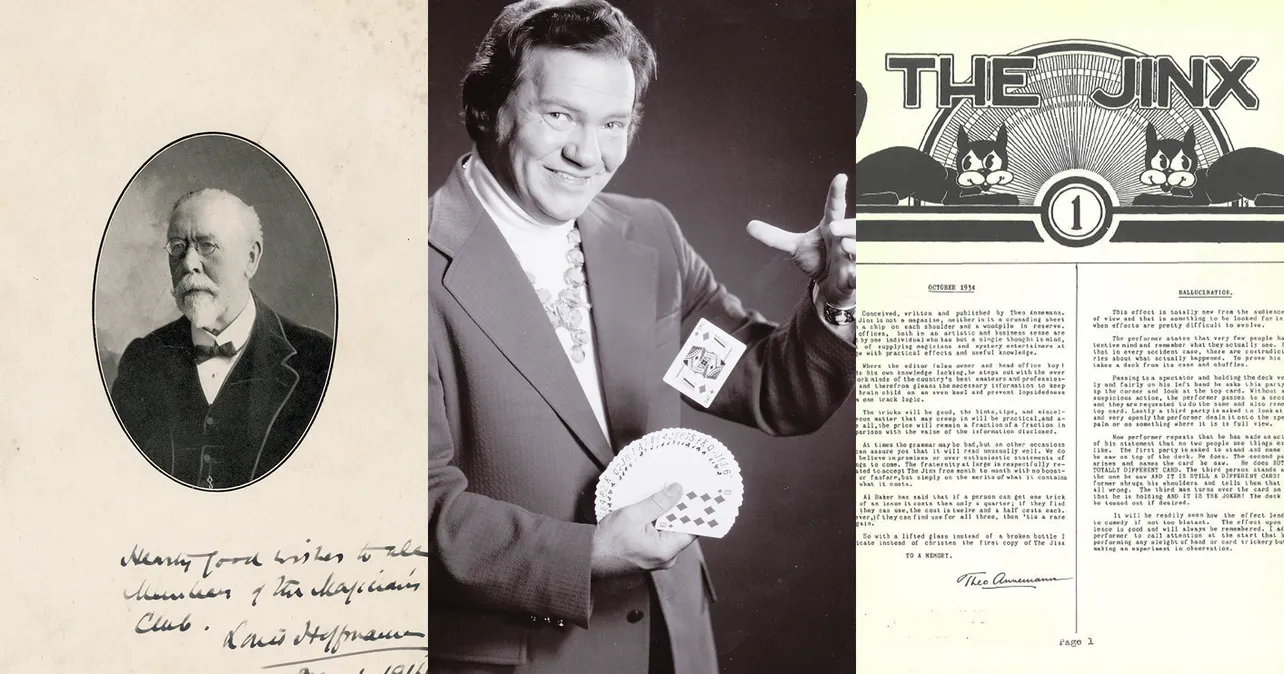
In October 1914, Will Goldston celebrated the launch of one of his many magic publications with the first issue of The Magazine of Magic. The magazine was the official publication of The Magicians’ Club, a London organization set up after Goldston fell out with The Magic Circle, and ran for nine volumes. Professor Hoffmann was invited to contribute an introduction to the first issue, where he reflected on the number of magic periodicals that were emerging as well as Goldston’s status. “Time was, within the memory of many of us, when a single magazine, devoted to magic, might probably have claimed with justice the smallest circulation in the world,” he wrote. “There are now some half-dozen magical journals in the field…. Such an array of competitors is formidable, but, to quote an old saying, ‘There is always room at the top.’ If Will Goldston does not start at the top, it may be safely predicted that he will spare no pains to get there.”
01
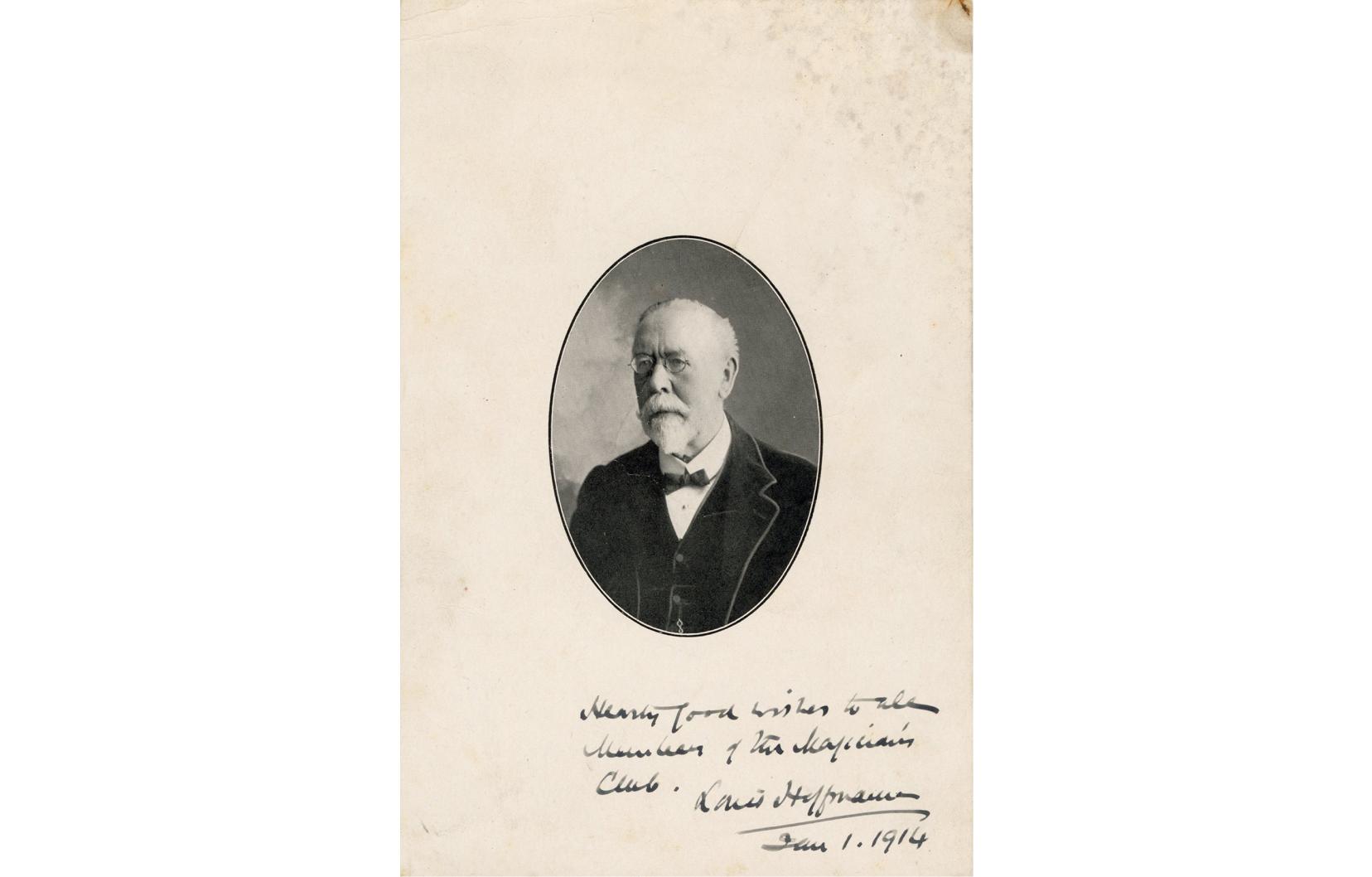
Twenty years after Goldston launched The Magazine of Magic, Theodore Annemann published the first issue of The Jinx. Running as a monthly publication between 1934 and 1939, Annemann’s masochistic tendencies came to fore when he increased production to a weekly schedule from 1939 until publication ceased in 1941. No complete original file of the magazine exists, as the production of a 48-page “extra” between volumes 149 and 150 was interrupted by Anneman’s death. Those additional pages finally saw print in 1972.
19
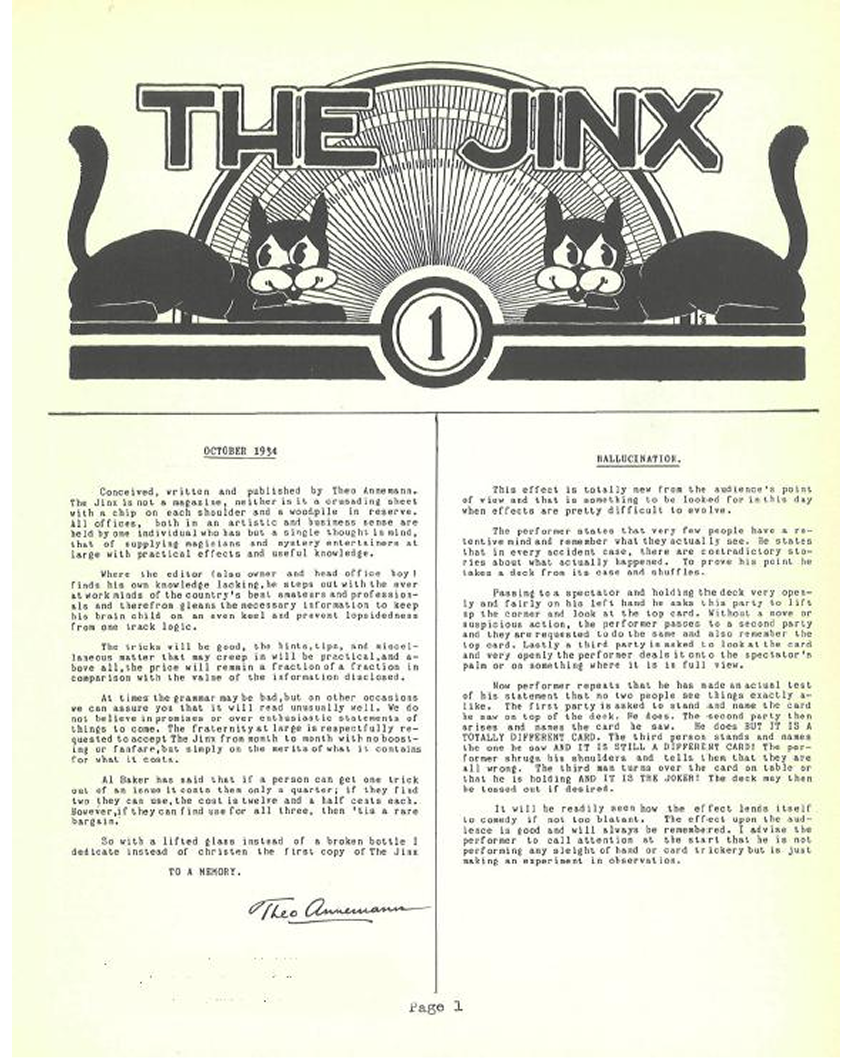
Historically a good month for magic magazines (and a bad one for escapologists, as we will soon see), on this day in 1946 Peter Warlock took out an advertisement for his new magazine, The Pentagram. The legendary publication ran until 1959 and featured contributions from magic luminaries including Robert Harbin, Billy McComb, Sam Sharpe, Roy Walton, Alex Elmsley, Ed Marlo, Stewart James, Ted Anneman, and Al Koran.
24
Thanks to limited coverage in the magical and popular presses it is unlikely that Genii readers will be aware of a historical event which took place 100 years ago this month; the death of Harry Houdini. On this day in 1926 the great escapologist performed what would be his last show at the Garrick Theatre in Detroit. Aged 52, he was apparently in considerable pain during the day and, after collapsing at the end of the performance, was rushed to the hospital. He died about a week later in Detroit’s Grace Hospital.
31
On Halloween in 1936 Beatrice Houdini, the famous performer’s widow, conducted a séance in an attempt to establish spiritualistic contact with her husband. Supported by her manager and companion, Edwa.rd Saint, the event was the last that Bess took part in—she famously commented in Time that “ten years is long enough to wait for any man.”
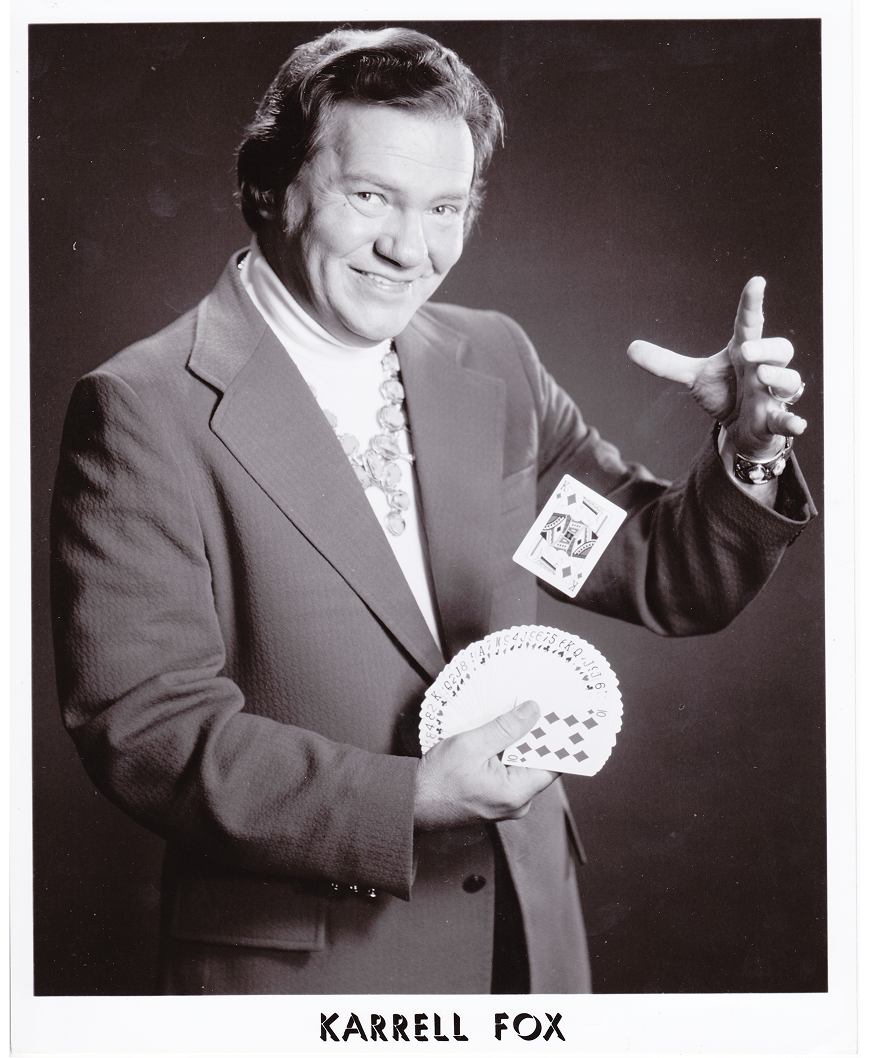
Houdini séances, however, were far from dead. Karrell Fox rekindled the idea in 1946, and a steady stream of communion with the dead magician emerged over the course of the following eight decades. Thus far none have been successful in conjuring him up, though cynically it seems likely they did achieve their primary motive. As Houdini expert John Cox has commented, “Houdini séances, while unsuccessful in contacting Harry, were very successful in conjuring publicity.”