
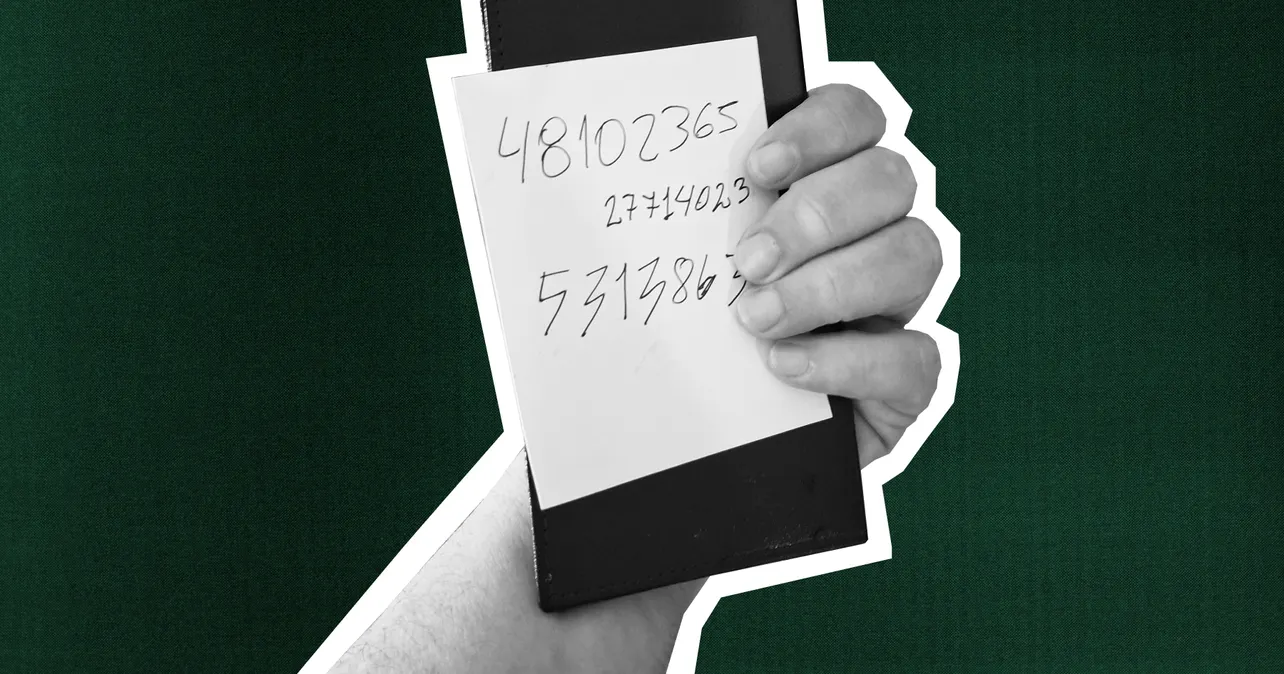
Today I would like to share my handling for Add a Number, an effect I have performed for nearly 20 years, which has become a staple of my repertoire. Explaining my handling also provides an opportunity to discuss the effect itself and some of the methods that have become my favorites.
While I refer to Add a Number as an “effect,” I’m not entirely sure if we are discussing an effect, a method, a principle, or all three at once. I tend to think of it specifically as an effect—predicting the sum of a series of numbers written by spectators—even though we often use the term generically to describe any method of forcing a number for various purposes.
Terminology aside, the effect has reached a high level of popularity, becoming a standard in the professional repertoire. This is largely due to contemporary versions like Toxic and its derived apps, as well as the idea of presenting the result as a date and time coincidence, or using Haim Goldenberg’s Cryptex font, which allows letters to be read as numbers.
Personally, I have always preferred the analog approach: simple paper and pencil. At the very least, I prefer using paper to collect (and switch) the numbers, even if the final addition is performed on a traditional calculator or a smartphone app.