If It’s Not Fixed, Break It

What magicians can learn from Orson Welles’ impact on filmmaking.

R. Paul Wilson
If It’s Not Fixed, Break It
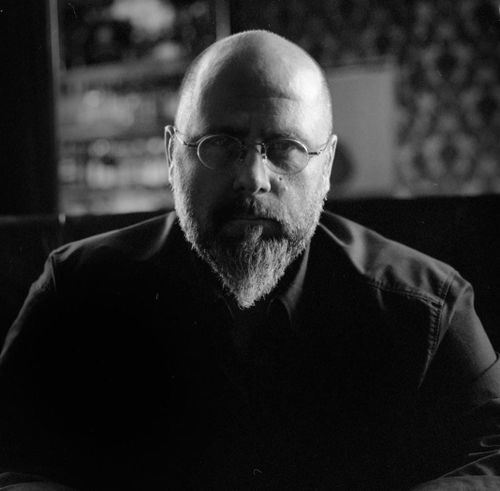
Photo by Alexander Kahle

In 1941, Orson Welles arrived in Hollywood at just 25 years old with absolutely no experience directing feature films. Nevertheless, he was handed an extraordinary contract by RKO Pictures granting him a level of creative freedom veteran directors could scarcely imagine. Many in Hollywood viewed him as arrogant, dangerous, or absurdly overconfident, but Welles responded by attempting to reinvent the language of cinema itself.

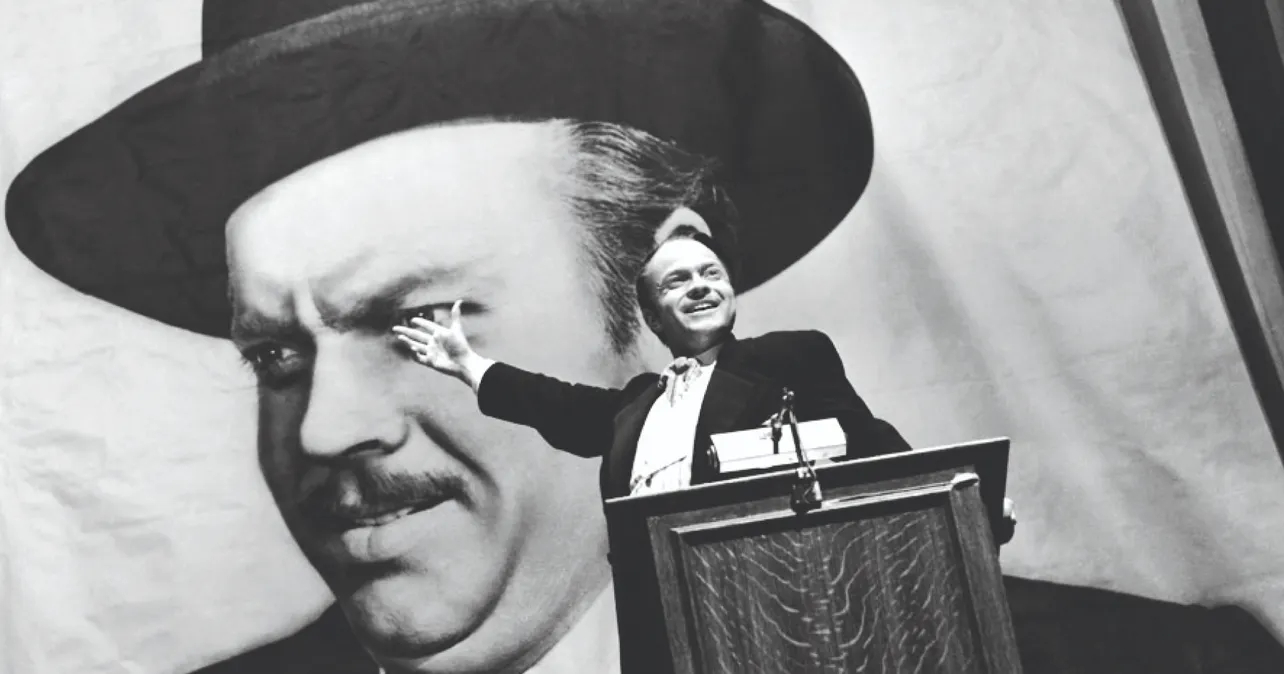
The result was Citizen Kane, a film that shattered conventional storytelling. Working alongside cinematographer Gregg Toland, Welles pioneered deep-focus cinematography, allowing multiple visual planes to remain sharp simultaneously. Scenes unfolded in long takes rather than according to standard studio cutting patterns. Dialogue overlapped naturally while timelines fractured and looped through conflicting memories and narratives. Low-angle shots exposed ceilings rarely seen in studio productions, making rooms feel oppressive and psychologically charged. Rather than telling a story cleanly from beginning to end, the film instead explored the impossibility of ever fully understanding a complex human being.

The resistance to the project was fierce. Media mogul William Randolph Hearst believed the film was a veiled attack on his life and attempted to crush it using his newspapers and political influence, with life immediately imitating art. Some theaters refused to screen it altogether while powerful Hollywood figures discussed suppressing the film entirely. Although Citizen Kane was critically admired, its commercial performance disappointed and Welles’ relationship with the studio system became permanently strained. Yet with each passing decade the influence of Citizen Kane has only expanded, remaining a seemingly inexhaustible source of inspiration for modern filmmakers.

When Welles was granted this opportunity he was already a prodigy; a prominent and divisive figure in theater and radio, having produced multiple infamous stage productions and famously set much of the U.S. into panic with his War of the Worlds broadcast. Meanwhile cinema, no longer in its infancy, had settled into safe and proven methods that often resulted in flat scenes shot to a rigid template designed primarily to facilitate the efficiency of the studio system. RKO needed to gamble boldly and chose Welles as their enfant terrible du jour.

The young director approached filmmaking not through ignorance but through obsession. He studied how films were made, screened countless productions, and continually asked himself and Toland how the experience of cinema itself might be transformed. For sheer density of creative ideas, Citizen Kane remains astonishing even now, but it is important to remember that this achievement was built not upon naivety or recklessness but upon a solid understanding of theater, narrative, and visual storytelling principles. Welles did not simply roll camera while knowing nothing about filmmaking. He evolved established techniques toward his own creative vision and when he broke traditional rules he did so deliberately, because the result served that vision.

I will not bore you with an itemized catalog of every revolutionary shot, effect, and storytelling device that emerged from Citizen Kane as there are already countless books, articles, and essays dedicated to precisely that subject. What interests me more is the lesson hidden beneath it, one that relates directly to another rule I wrote for myself in The Thirteen Paths: Learn the rules, then break them.

This is not an absolute principle. I am not suggesting that rules must always be broken, only that if one chooses to break them one should at least understand what those rules are intended to accomplish in the first place. It is certainly true that Orson Welles had never directed a feature film before Citizen Kane, but he had seen many films, studied the form intensely, and consulted experienced filmmakers throughout his journey. Another important factor was his almost otherworldly confidence, which many interpreted as arrogance and perhaps rightly so, but he launched himself into that ambitious project armed with an astonishing amount of knowledge and creative instinct for such a young artist.

The exact opposite example might be Tommy Wiseau and his infamous film The Room. Wiseau did not evolve the art of filmmaking. Instead, he ignored it completely. The film became legendary for technical ineptitude: incoherent editing, mismatched shots, bizarre line delivery, continuity errors, unresolved subplots, unnatural dialogue, and scenes staged with what often feels like an alien misunderstanding of genuine human interaction. The rules of filmmaking were not transcended but ignored or discarded. Wiseau wanted to be writer, director, and star simultaneously, but beyond the money required to finance the production there appears to have been little understanding of dramatic structure or cinematic language. Remarkably, The Room continues to screen around the world, with audiences attending not to celebrate artistic success but to marvel at its astonishing degree of failure.

When learning any discipline, students are naturally drawn toward easier paths whenever difficult roads lie ahead of them. Many take shortcuts or convince themselves that avoiding hard work is somehow evidence of mold-breaking creativity, but genuine innovation and raw creative genius are extraordinarily rare. That is not to say such things never happen. I can think of several remarkable performers and creators who sidestepped traditional methods entirely in order to forge their own style or invent their own rules, often arriving independently at principles that intersect established knowledge. Lennart Green is a perfect example, developing his own, unique branch of card magic while appearing to ignore almost everything that came before him, yet doing so with astonishing success. Cases like his, however, are not exactly common.

The truth is that so-called rules are usually there to guide us, to offer solutions to problems others have already encountered through years of failure and experimentation. We are all free to transcend those solutions if we wish, but when we have the opportunity to stand upon the shoulders of our predecessors, why would we not take that opportunity and jump even higher thanks to their insights?

There is a reason each new generation of magicians achieves sleight-of-hand or performance techniques that would have seemed impossible at the same stage decades earlier. Knowledge evolves. One generation passes down hard-won experience, painful lessons, and refined understanding to the next. To ignore those lessons completely often means stumbling blindly into traps already carefully marked on the creative map.

Innovation is not essential for every artist; it should serve some purpose. More often than not it emerges from a rich history of past endeavors from which the creator inevitably borrows, consciously or otherwise. Learning the rules simply means absorbing anything that might inform, sharpen, or inspire as we move forward. Charging ahead blindly may feel exciting and rebellious but it frequently produces little of lasting value, which is precisely why so many creators who manufacture magic tricks purely for sale rarely care about researching previous methods or discovering how unoriginal their “new” ideas might be.

In every artistic field the older generation is often suspicious of the younger, which is itself a creative mistake because both perspectives can enrich one another. Established directors were quick to dismiss the young Orson Welles because how could someone so inexperienced possibly succeed without their knowledge or years within the system?

The answer to that question required imagination, creativity, and an almost inexhaustible capacity for wonder. I therefore believe it was no accident that Welles was also a magician.