Clayton Rawson was a prolific inventor of effects, and explained many of them in Genii and other trade publications. He was also prone to sneak effect descriptions into his mystery fiction. And while editing a special-edition boxed set of four novels (Clayton Rawson’s Merlini Mysteries, coming from Vanishing Inc. this year) I came across a valuable one.
In his 1940 novel The Headless Lady, Rawson pauses the action for a full page while The Great Merlini, amateur sleuth and professional magician, entertains cops with a deck of cards and an effect he praises as “a magician’s dream” that he openly names: “‘Brainwave,’ an invention of my friend, Dai Vernon.” (This is just one of numerous Easter eggs he sprinkles throughout his novels for the amusement of his fellow magicians—alongside others aimed at his fellow artists, bachelors’ degree recipients, mystery fans, and pop-culture vultures that I’ve illuminated through nearly 800 new footnotes.)
Calling an effect by name in public may be verboten now; but this was before the age of the internet, so audience members couldn’t Google “Brainwave” for the secret. They would simply have learned that within this strange subculture called magic, magicians often perform repertoire devised by others to whom they respectfully give credit.
The appeal to magicians, of course, would have run deeper—including shared appreciation of a favorite new effect (“Brain Wave Deck” had been published in The Jinx just a couple of years earlier) and the namecheck of a respected peer. Then Rawson takes it even further by describing a new second phase.
Peter Warlock takes notice of it in his review of the book in The World’s Fair (April 12, 1941): “Those who use the Dai Vernon ‘Brainwave Deck’ will be interested in the follow-up routine that Merlini uses.” The book’s own narrator thinks equally highly of it, using language that reads like ad copy: “I’ve seen him do that trick at least a dozen times; it has never failed yet and the cards named are invariably different. I have tried to solve it using bribery and threats; but with no success.” Unfortunately for him, Merlini’s handling was never published. So, more than 80 years later, it’s my privilege to share mine.
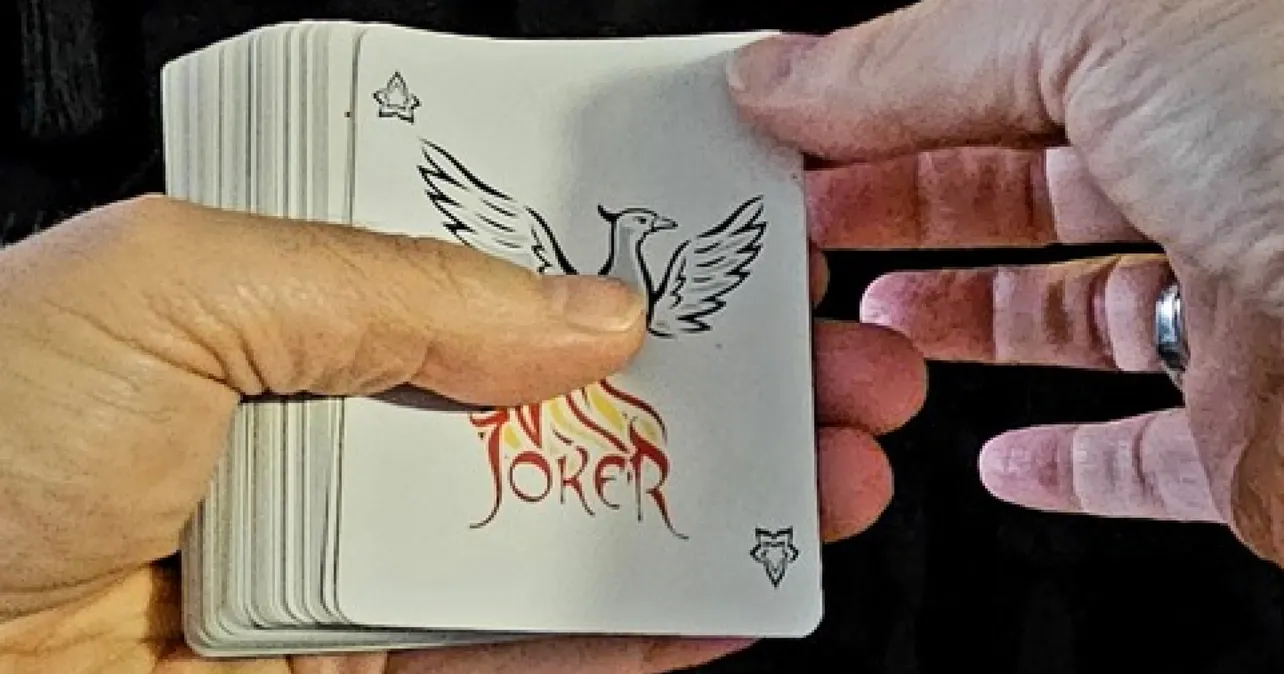
Effect: Single Joker, as per The Headless Lady
After performing the standard Brainwave effect the performer, sensing that a skeptical audience member might conclude, however wrongly, that the participant had been prompted in advance to name that card, offers to try something else. After tossing away the Joker, he asks a different participant to name a different card. The performer spreads through the face-down deck—but this time, no card is found face up.
Is there a problem? It sure looks that way. But the performer claims to have been prepared for this. In fact they explain that when they were getting rid of the Joker, they didn’t really, and they show the Joker on the face of the deck as proof. As for the face-down card on the floor, they use the Joker from the deck to flip the card over and it’s the named card.