Welcome to 2026. We won’t pretend to be responsible for the entire year, but we are proud to start off January and take credit for this month’s array of magic. Juliana Chen appears on our cover—for the second time since May, which has to be some sort of record. What can we say? She looked the part onstage at the Mystify convention, and she has a fascinating story to share. Our editor Chloe Olewitz explores the journey behind Juliana’s extensive work and accomplishments. If you know Juliana, you’ve already turned to those pages. If you only know her by her work and reputation, you’re in for a treat.
And please don’t miss Zoe Reiches’ profile of Suzanne—another great, personal story about the influence of this highly regarded magician. Zoe tells it from her own point of view, not only explaining Suzanne’s work, but also crediting the important influences she’s had on her own career.
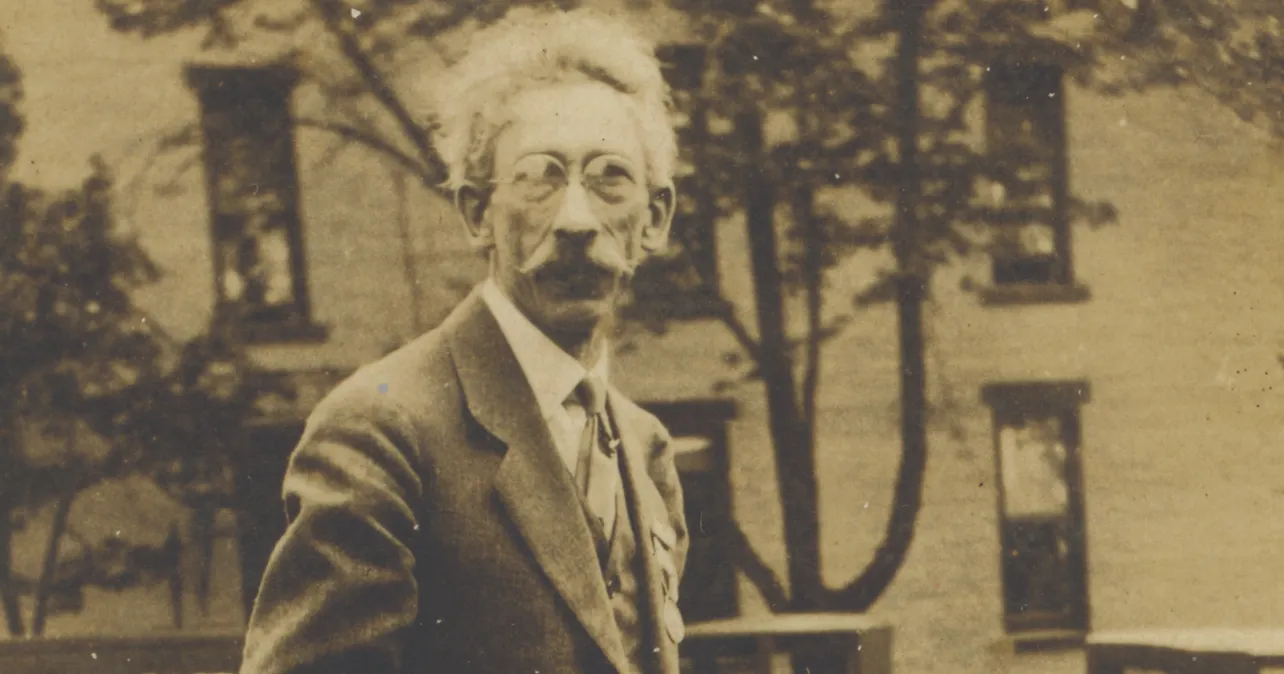
Finally, we’re looking at Joseffy, the mysterious Lyceum performer from the early 20th century, by focusing on Carl Sandburg’s biography of the magician.
Joseffy’s always been a fascination of mine. My information has depended on files from the late Claude Crowe, the magician and collector, who sent me intriguing bits and pieces about this incredible performer. Erika Dyson, a professor of religious studies at Harvey Mudd College, also contributed to the story. Erika has had a long interest in spiritualists and magicians and reappears occasionally in my inbox. As I started assembling this month’s story about Joseffy, Erika appeared, on cue, to solve the problems about Joseffy’s family history: when and where he was actually born.
Don’t miss Alba’s suggestions about criticism: getting and giving. Annanya George makes a plea for missing information. Billy Kidd welcomes us to The Magic Castle. Joey Martinez welcomes us to House of Cards. David Regal provides the history of one of magic’s most incredible marketed wonders. We also have Pete McCabe on Phil Goodman, and David Kaye on public transportation. Harrison Greenbaum explains why you’re wrong about crowd-work. And we’ll wrap up the magazine with some deliberately inspiring perspectives, from a brass magician to a thoughtful dove worker to an award-winning fashionista.
As things have been settling around our first anniversary, our magic editor, Noah Levine, has chosen to step down from the job. He’s going to continue through the March 2026 issue.
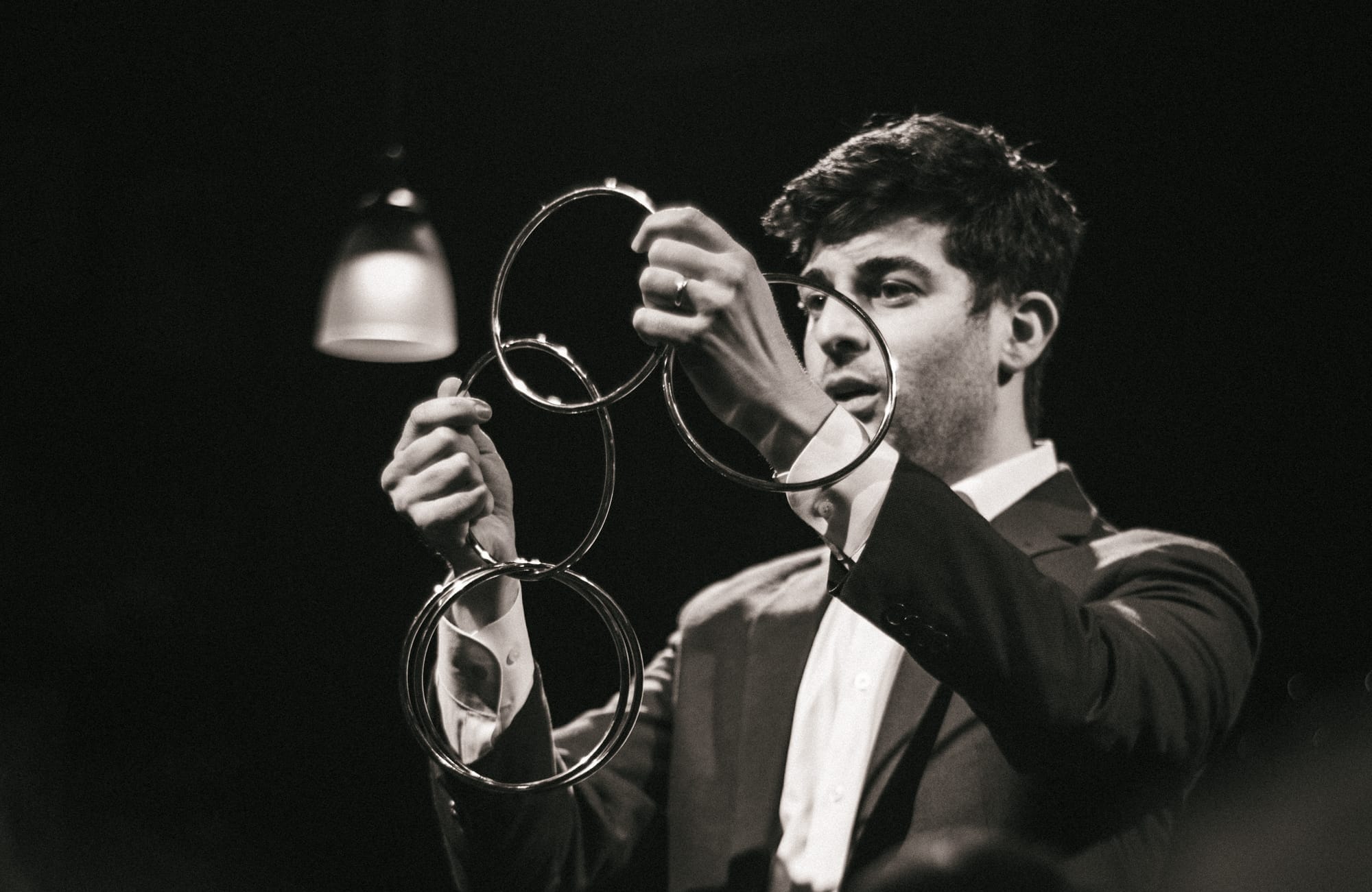
All of us at Genii are sorry to see him go. When I started working on the magazine, a number of my best friends in magic told me, “You’re really going to enjoy working with Noah Levine.” They were right. Noah is diligent and creative. He quickly demonstrated to me that there are entire categories of magic that needed to be explored, brand new contributors, and brand new ideas. He also knew that there were innovative ways of presenting that material to readers. (I’d just mention the columns by Blake Vogt, Adam Elbaum, and Abby Segal as examples, as well as the fantastic issue devoted to Tim Conover’s magic.) Noah started his work here by kicking down the doors to how we were thinking about our craft. Yes, I enjoyed working with him and I also benefited from his expertise. You’ve been reading the results of his work every month.
In fact, there was very little at Genii that Noah couldn’t do. He is a great editor, writer, reviewer, and curator of material. Unfortunately, he’s also a very successful performer. That means that he’s been struggling to balance all these elements, and understandably he’s needed to prioritize his work as a magician and entertainer.
Of course, we twisted his arm for a few months, on your behalf. (On our behalf, as well!) The great news is that he’ll still be part of the unofficial Genii team. You’ll see his byline turn up now and then on reviews, or articles, or other contributions. Will Houstoun has already been soliciting his help with plans for the magazine as we move forward.
With the January 2026 issue of Genii, we’ve reached an interesting time in our little experiment. It’s been a “little” experiment, because it has to be put in context with the entire history of Genii magazine—which has been published continuously since 1936, America’s most successful independent magazine devoted to the art of magic. Under the guidance of William Larsen Sr., and then his son, Bill Jr. and the Larsen family, including Geri, Irene, Erika, and Dante, and then under the careful stewardship of Richard Kaufman for roughly 25 years, and Randy Pitchford, as well, more recently, you can see that Genii has been in this for the long haul.
That’s why we were excited when our publisher decided to recommit to the magazine and dust it off for a new generation. Actually… for new generations. It was an exciting proposition, and quite a challenge. I was brought in and asked to take the role of editor for a year, supervising the transition and working with the new team to develop a new product. We assembled a new team, with our boss Julie Eng, and editors Vanessa Armstrong, Noah Levine, and Chloe Olewitz, dedicated to keep Genii going.
With the January issue, we’ve completed that first year. It’s 12 actual issues, a mere “blip” in the history of this grand magazine, but it’s a blip that represented a special effort, an interesting attempt at something new, and the collected wisdom and talents of a number of important magicians and writers.
We’ve felt the shift. Best of all, we’ve gotten great responses from our readers. Just take a look at our mailbox this month. We’re not simply trying to keep Genii “going,” but we’ve found a new, exciting path that makes sure we’re all blazing new trails. I’ll step aside after February and your new editor, Will Houstoun, will take over. After knowing him for many years and working closely with him over these last few months, I can assure you that he is doing an amazing job for our readers. Give him a chance to settle in, but even better, let him know what you’re thinking about the magazine.
Recently I had a chance to sit down with Will. If you’ll excuse the “editor to editor” speak, I think you’ll enjoy his approach to the magazine and his ideas about where we’re going.
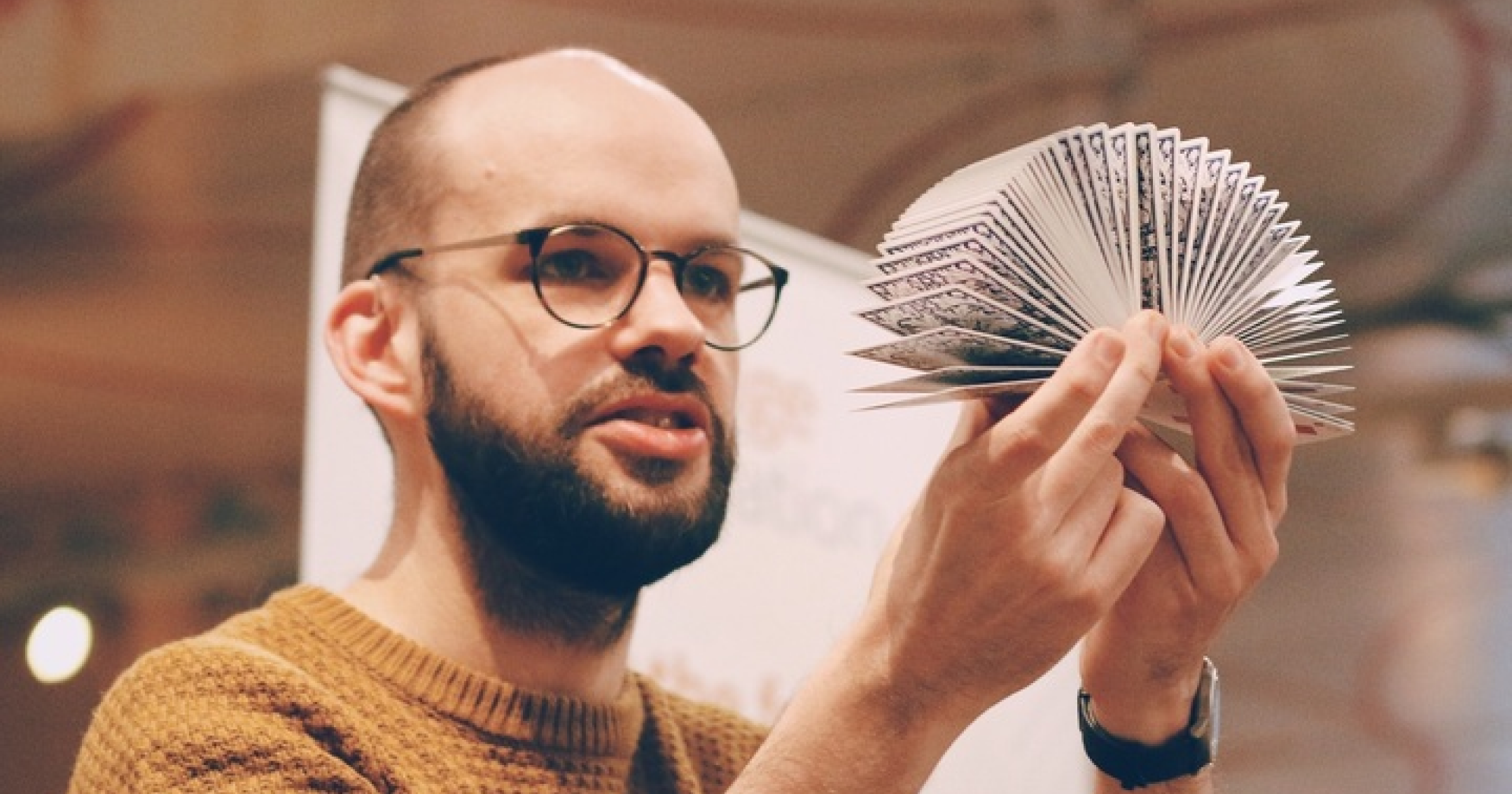
Jim Steinmeyer: Because you’ve had such a varied career, including editing an important magazine, how does Genii fit into your interests?
Will Houstoun: My career has been an unusual one. Via a circuitous route, which included teaching technical sleight of hand around the U.S., publishing a book about late 18th-century card magic, and a master’s degree in mechanical engineering, I ended up researching Professor Hoffmann’s classic magic books as my PhD project in a literature, film, and theater department.
Hoffmann’s key innovations, in Victorian England, were to showcase the best that magic had to offer, and to explore new ways that magic could be relevant to people’s lives. Those two things broadly define my interest in magic today, whether that is using magic as a storytelling tool in film and theater, teaching tricks to young people as part of a therapeutic program, using magic as an educational tool for medical school students, thinking about different forms of performance, or editing Genii.
This magazine, with its unique combination of a rich heritage and the astonishing work you and the rest of the team have done in the last year, offers a fantastic opportunity to help showcase the best and most innovative work that is taking place in magic today, to explore new and exciting ways that magic can be part of people’s lives, and in doing those two things to help shape what magic will become.
JS: How much can you draw upon from your experience with The Magic Circular, The Magic Circle’s 120-year-old magazine?
WH: Before I started work on The Magic Circular, Matt Field, Richard Kaufman, and Stan Allen each separately told me that I might think I knew what producing a monthly magazine would be like, but that nobody could really know unless they had done it. They were, of course, completely right. One hundred sixty-eight issues later I have learned a lot about how to put a magazine together, and I think the knowledge will be a huge help at Genii.
Having said that, Genii is a very different publication than The Circular, and will offer a whole new set of challenges and opportunities. The two biggest differences between the magazines are daunting and exciting in equal measure.
The first is that editing The Circular was a solitary pursuit, while Genii has a whole team of knowledgeable, insightful, and well connected editors. That team means that Genii has a breadth and depth of understanding that no individual could, and I can’t wait to both shape and be shaped by the team’s knowledge, as I have a chance to produce a magazine with an editorial group.
The second is that The Circular is a remarkable magazine with a rich heritage and knowledgeable contributors, but it is essentially a magic club magazine. As an independent magazine, Genii has none of the restrictions that a club magazine does, and therefore every facet and angle of magic are something that we can cover. That lack of restriction offers huge potential but also increased responsibility to sensibly decide what we do, and do not, cover.
JS: What do you think are current opportunities, or even the missed opportunities—for magicians? Are there things that, right now, we don’t properly address in our world of magic?
WH: I think this is a great question, and one that I find myself holding entirely conflicting views on.
On one hand I think one of the biggest challenges for magicians is answering the question, from an imagined audience member after a show, “That was great, but why should I care?”
On the other hand, I struggle to accept magic that “meaning” has been messily forced upon. Perhaps the challenge is to produce work that offers the scope for meaningful engagement when appropriate, and to simultaneously allow that, to quote David Britland in a past issue of this magazine, “Sometimes a trick is just a trick, and you don’t have to try and challenge their concept of time and space along the way.”
JS: What are some of the things you’ve seen that suggest the viability of magic, the ability to find new audiences?
WH: I think that one powerful argument for magic’s viability is to look back at all the times magic was supposedly about to die, whether because of Hoffmann’s books, the advent of instructional VHS tapes, or the adoption of the internet. In all of these instances, despite dire predictions, you see that magic not only happily survived but also, in retrospect, thrived.
Approaching the question from the opposite direction, one of my favorite things about magic is that you can look in an old book, like the 16th-century Discoverie of Witchcraft, and read about tricks like making one coin transform into another, or jump from one hand to another. Presumably they were good tricks at the time, or they wouldn’t have been recorded, and they remain good tricks five centuries later, despite the extraordinary changes that have occurred in our understanding and knowledge of the world.
For me the big question is what types of magic will remain viable in the coming decades. For example, as AI enhances people’s ability to make anything seem to happen on video, will traditional magic tricks work (to the extent that they ever have) when meditated via a screen? Or, in a world where information can be accessed more and more rapidly, with less and less effort, will memory acts and other demonstrations of remarkable mental skill cease to be wonderful?
JS: Readers will be able to reach you with their advice about Genii. Do you have any advice for the readers? Things which should get their attention?
WH: The key thing to say is that over the last year you and the entire Genii team have taken the magazine through a remarkable transformation, and my role is now to help solidify those changes, and iteratively develop them, rather than beginning more radical adjustments. That said, I do have some ideas for how we can continue to refine the look and content of the magazine in the coming months, and I hope readers will start to notice some changes filtering into its pages. It is also always worth reminding our readers that we, myself and and the rest of the Genii team, are always keen to hear their thoughts on different aspects of the magazine, whether positive or negative, as well as any news or stories that Genii should know about. If you email editors@geniimagazine.com that will reach the entire editorial team.
Don’t miss out on any magic news!
Subscribe to Genii magazine for as low as $69/year. That’s less that $1.35 a week! Not only do you get all the latest and greatest magic news, but you also get access to our full digital archive that includes 89 years of Genii and 25 years of MAGIC Magazine. And, you also get full premium access to geniimagic.com content, and an annual visit to The Magic Castle.