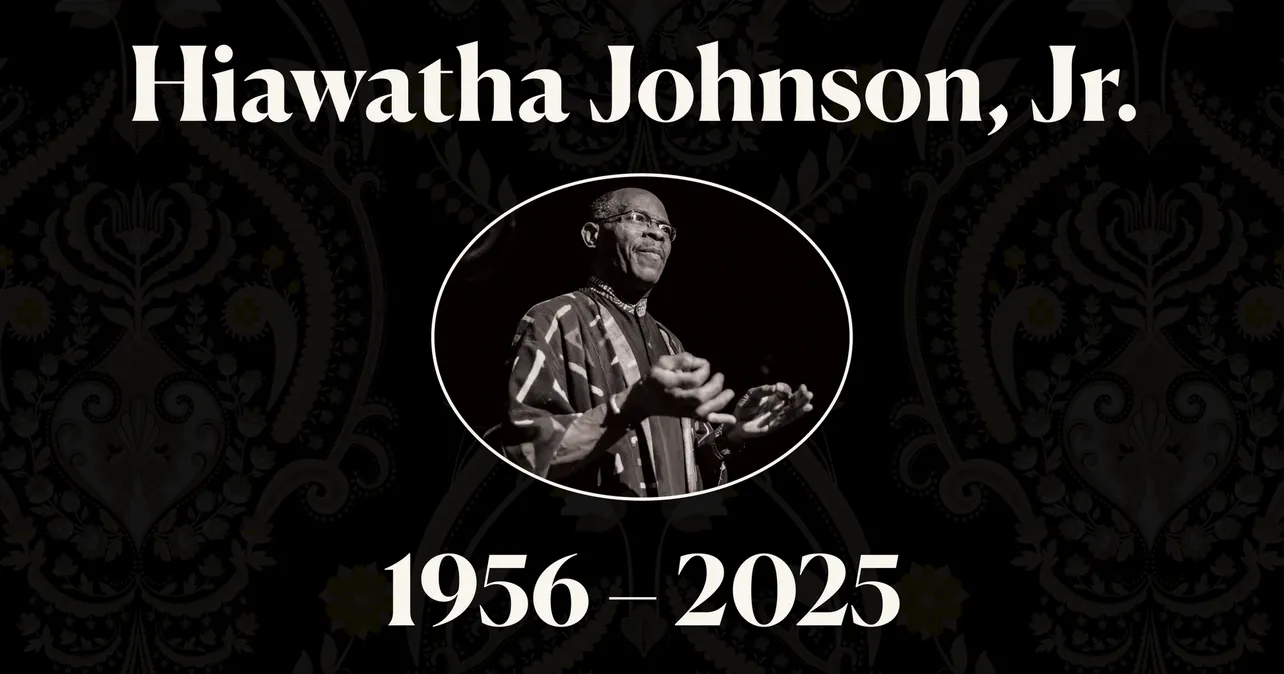
Hiawatha Johnson, Jr. was, in his own words, an “Entertainment Artist” who worked as a performer, choreographer, musician, lecturer, magic critic, consultant, director, and producer. Born in Lynchburg, Virginia, he began his onstage career as a singer and piano player, supporting the Gospel performances of his father.
His experience in magic began with seeing his brother rub a penny into his forearm. The simple illusion landed perfectly in young Hiawatha’s perception, and, according to him, “altered his mind forever.” His frustration with not understanding what happened, paired with his love of Mark Wilson’s TV series, The Magical Land of Allakazam, led him to a lifelong fascination with the art of magic. In magic, one of his greatest influences was the late Max Maven, whom Hiawatha considered to be a mentor and primary advisor.
His signature work Kalimba Talk showcased his alter-ego “Prince Junie” (a moniker created through his father’s shortening of the word “Junior”). The Prince’s fusion of magic, music, dance, and storytelling in magical performances, like The Secret of How To Fly, blended Hiawatha’s love of West African arts and magic. For over 35 years he served on the faculty of Randolph/Randolph-Macon Woman’s College as an accompanist and artist in residence for the department of dance.
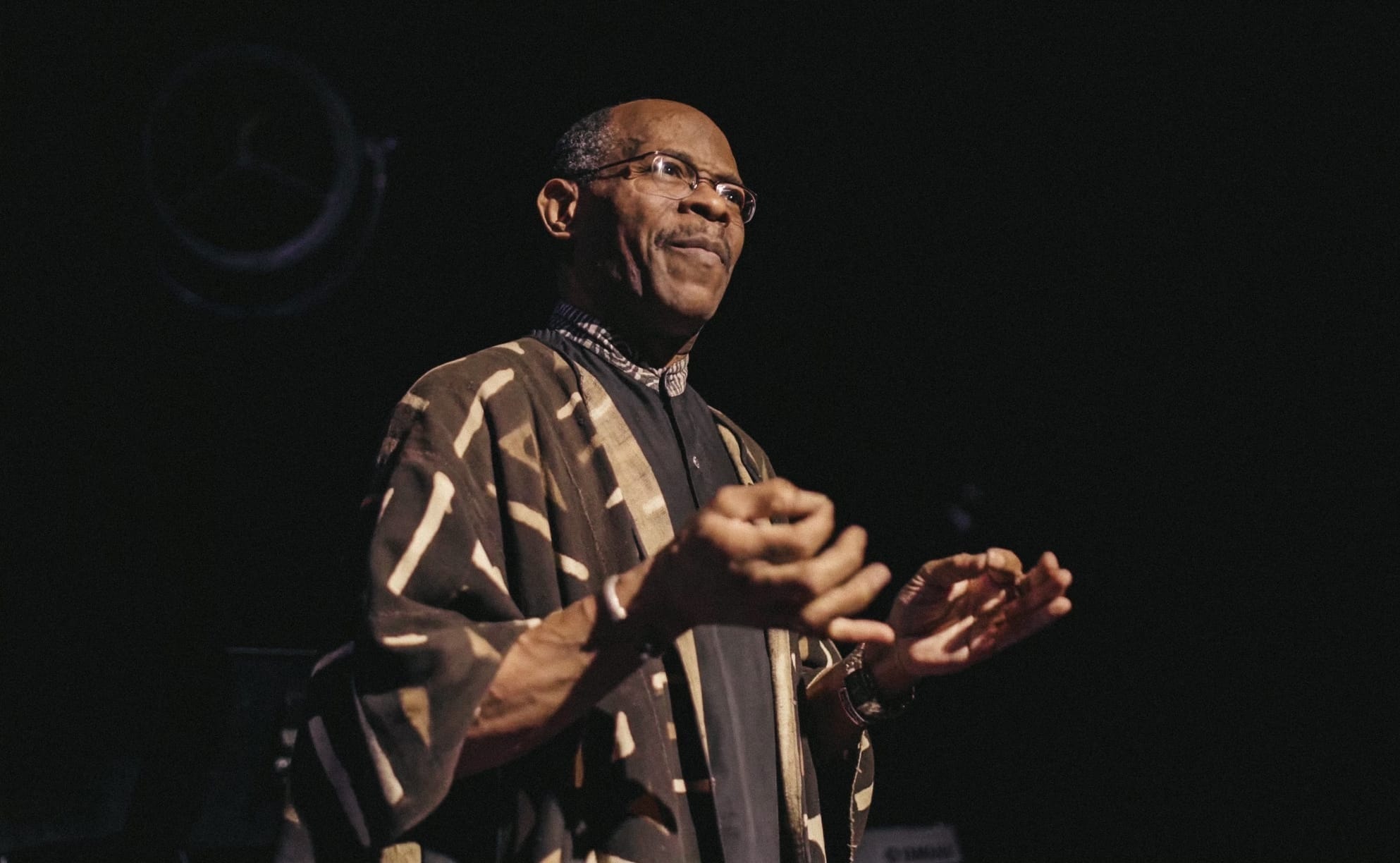
The loss of his student and mentee Mark Nathan Sicher in 1994 was a turning point, where, according to his daughters, “The world stood still; his artistry ceased to flow.” At that point, Hiawatha stopped performing. When he reemerged, his message to the world was that no matter what or whom you lose, you must always “Keep the Magic Alive.”
Later that year Hiawatha became the third African American to appear on the cover of this magazine. In that issue, Jamy Ian Swiss wrote that “[Hiawatha] lives for this art—magic lies at the core of his being—and when he implores you to ‘Keep the Magic Alive,’ he means it.”
Hiawatha went on to found and direct K.T.M.A. Arts, a national consortium of performing and visual artists founded in Lynchburg, Virginia. In 2007, he became the first full-time artist to receive Lynchburg’s “The Mayor’s Award of Excellence.”
His writings were published in multiple magic periodicals, among them: Genii, MAGIC Magazine, MUM, and The Linking Ring. Most recently he contributed a foreword and served as a sensitivity reader for Margaret B. Steele’s The Great Boomsky: The Many Lives of Magic’s First Black Superstar.
Hiawatha taught at Tannen’s Magic Camp for over 30 years. His workshops, S.N.A.P., Bold!, Open Minds, and Understanding Parameters, focused on the development of original routines, along with creative problem solving in magic and in life. He was featured in two documentaries about the camp: Ron Yoshida’s unreleased Share The Magic (1996), and Judd Ehrlich’s award-winning Magic Camp (2012). He also appeared in the PBS documentary The Art of Magic (1998), Joe Gold’s Desperate Acts of Magic (2013) and Harry Lorayne’s “Memory Power” Infomercial (1986). His recent stage work includes a residency of his own, Life Magic Fables at Poe’s Magic Theater in Baltimore, and directing Ran’D Shine’s Evidence of Things Unseen at Liberty Magic in Pittsburgh. In 2015, the SAM presented Hiawatha with the distinguished National Council Presidential Citation.
In remembering Hiawatha, Michael Carbonaro called him the “titan of my magic youth.” Harrison Greenbaum remembers Hiawatha as “a mythological force,” adding, “The man did actual magic.”
Behold! His work and influence lives on. “Keep the Magic Alive.”